
Software Unreal Engine 5
Roles N/A
Languages Used Blueprints
Type University Project
Project Mars is a Roguelike that I developed as a level design project at the University of Bolton in my third year.
Gameplay Design
Designing the gameplay that the game would eventually have, I originally researched existing games within the genre and took inspiration. Two games specifically gave me inspiration when designing Project Mars. These two games were Hades and Risk of Rain 2.
I decided to create some core gameplay pillars that will define the player’s experience. These pillars are:
– Learning and Progression from Death
– Player Choice Priority
– Randomly Unique Experiences
These pillars were core and pivotal in creating the specific design of a roguelike game, giving players total control in their choices.
Shooting System
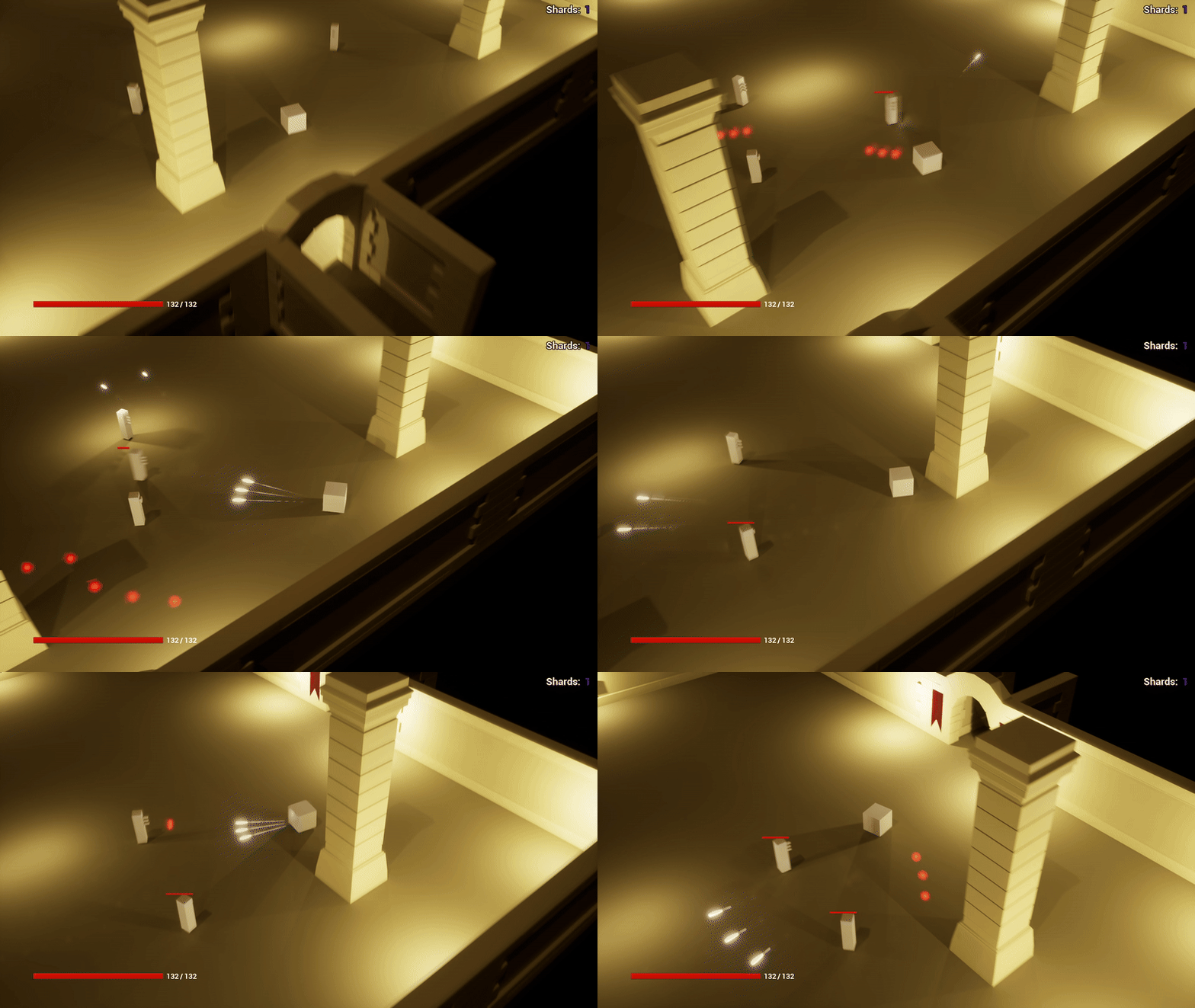
Project Mars’ shooting mechanics have two different modes. The default mode is a single projectile that is fired from the player. It travels in the direction the player is looking and not where the player is moving, giving the player complete control over the player character. The second mode that the player has is the “triple shot” upgrade. This upgrade shoots 3 instead of 1 projectile in a cone.
Blueprint Code
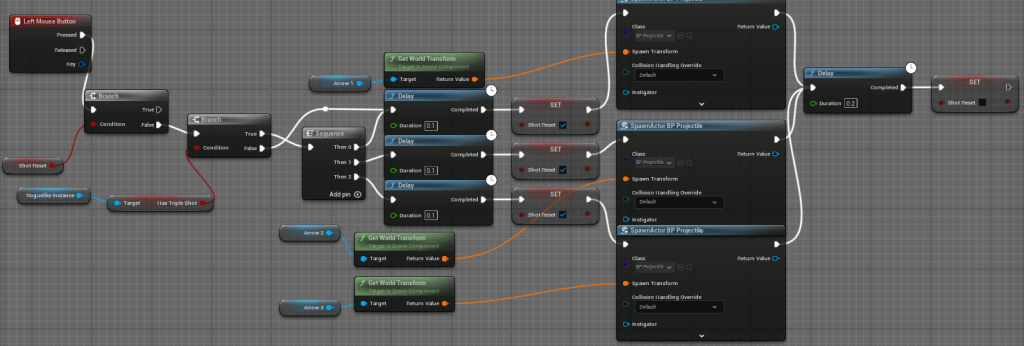
It first checks if the player has already shot, , if not then it will check to see if the player has the triple shot upgrade. Depending on if the player has it or not, it will either spawn 1 projectile or 3 projectiles. It will then reset the shot after .2 seconds so that there is a little delay in between shots.
AI
Melee Enemy:
The melee enemy simply moves towards the player when detected using AIPerception. When the player enters a collision box in front of the enemy, it will deal damage every couple seconds until the player is dead or moves out of the collision box.
Ranged Enemy:
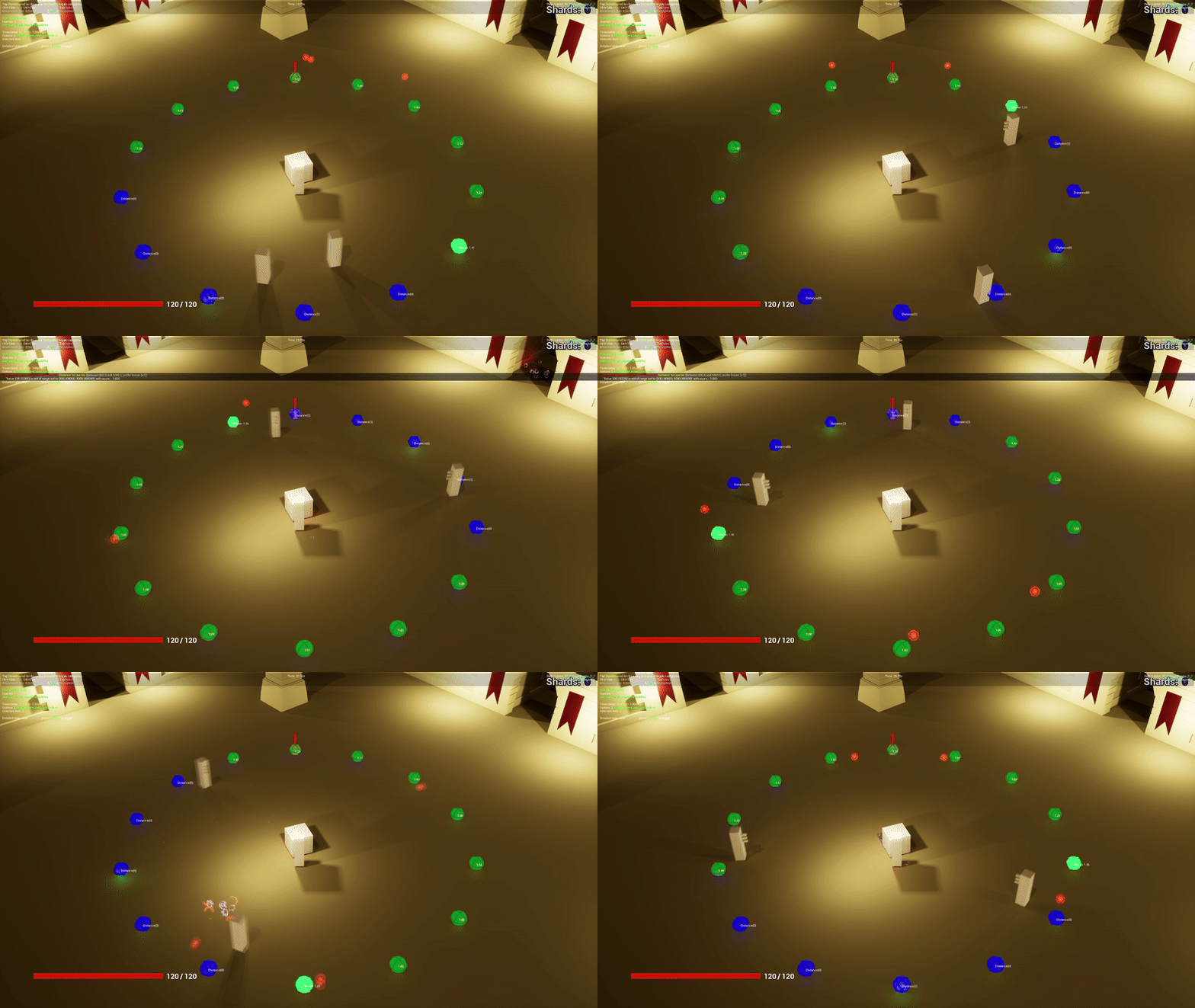
The ranged enemy AI runs off an environment query. It creates several points around the player and chooses the nearest one, making it so the enemy orbits around the player. Once it reaches a point or after a certain amount of time passes, it will shoot, create a new point and move to the next point.
Room Rewards and Permanent Rewards
Every time the player completes a room, the upgrades spawn at the exit doors. There are 8 upgrades in total. 4 common upgrades, 3 rare and 1 legendary. There is a 70% chance to spawn a common upgrade, 20% for a rare upgrade and 10% for a legendary upgrade. Each upgrade has a significant impact on the power of the player.
As for permanent rewards, the player can pick up items called “shards”. Shards are dropped from enemies when killed and are used to buy permanent upgrades in the store at the main menu. One of these permanent upgrades is the “Triple Shot” upgrade which lets the player shoot 3 projectiles instead of 1.
Level Design
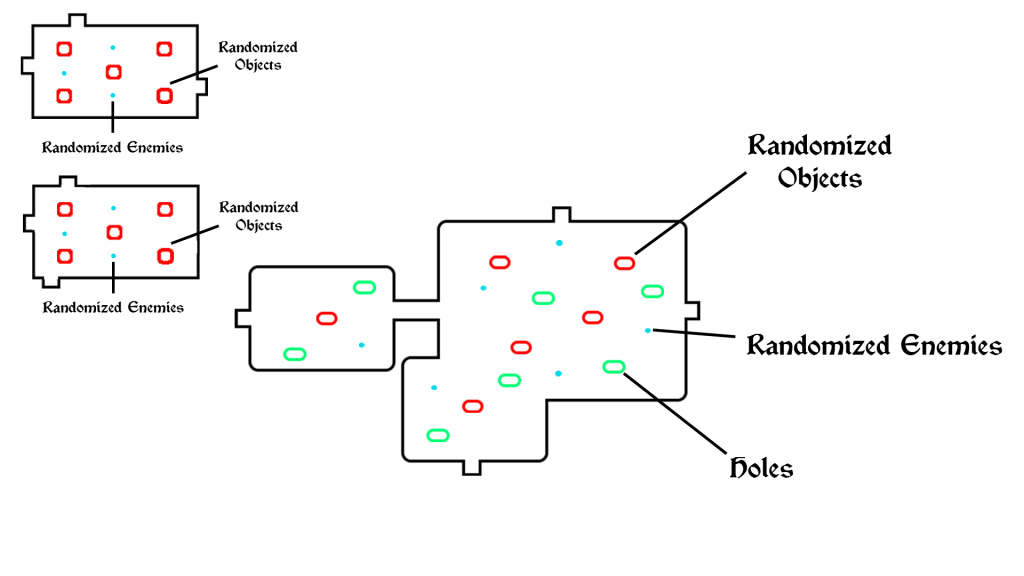
When designing the levels, I decided to design it around the concept of looping around a never ending cycle of rooms. Each room will have randomly generating through a set of objects. It will either spawn a pillar, an explosive barrel or nothing at all, making each room unique in its playability.
Enemies also randomly generate between melee and ranged, giving random combinations, giving varied difficulty through different rooms.
Their are two tiers of levels, the first tier is a smaller room that has a few enemies and randomly generating obstacles. The second tier is a larger level that spawns in more enemies and obstacles, designed to overwhelm the player until they obtain the triple shot upgrade.
Level Plans
 Luca Periti